
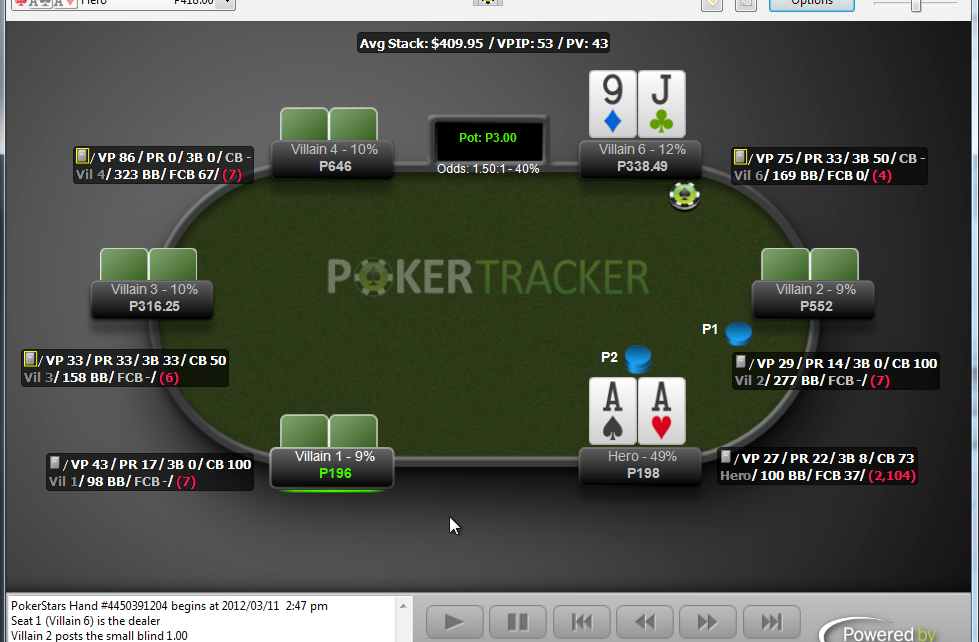
Poker differs from most casino games because it blends probability, psychology, and decision-making. While luck influences short-term results, long-term performance depends heavily on analysis and discipline. This is where poker tracking software plays a crucial role. By collecting and interpreting hand data, these tools help players identify patterns, refine strategy, and make more informed decisions.
What Is Poker Tracking Software?
Poker tracking software is a program that records hand histories from online games and converts them into statistical insights. It typically integrates with supported poker platforms and stores data in a searchable database.
Core functions include:
- Recording every hand played
- Calculating player statistics
- Displaying real-time data overlays (HUDs)
- Generating performance reports and graphs
These features transform raw gameplay into measurable information.
Understanding the Heads-Up Display (HUD)
A HUD (Heads-Up Display) overlays key statistics directly onto the poker table interface.
Common HUD stats include:
- VPIP (Voluntarily Put Money in Pot) – Measures how often a player enters a hand.
- PFR (Pre-Flop Raise) – Indicates raising frequency before the flop.
- Aggression Factor – Shows betting versus calling tendencies.
- 3-Bet Percentage – Tracks re-raise frequency.
By observing these metrics, players can adjust strategies against specific opponents rather than relying on guesswork.
Identifying Leaks in Your Game
One of the greatest benefits of tracking software is leak detection.
Examples of common leaks:
- Playing too many weak hands
- Folding excessively in certain positions
- Under-utilizing aggression on the river
- Losing consistently from specific table positions
By reviewing hand histories and filtering data by position, stake level, or opponent type, players can pinpoint recurring weaknesses.
Improving Decision-Making Through Data
Data-driven adjustments enhance consistency.
For example:
- If statistics show losses from early position, tighter hand selection may be needed.
- If 3-bet success rates are low, adjustments to bet sizing or hand range can improve outcomes.
- If continuation bets are frequently called, post-flop strategy may require refinement.
Instead of relying on intuition, players base decisions on measurable trends.
Tracking Long-Term Performance
Short-term variance can distort perception. Poker tracking software counters this by displaying long-term results through:
- Profit and loss graphs
- Win rate per 100 hands (bb/100)
- All-in adjusted equity calculations
- Session-by-session breakdowns
These metrics help players evaluate performance objectively rather than emotionally.
Opponent Profiling and Table Selection
Over time, databases accumulate information about recurring opponents.
Benefits include:
- Identifying tight versus loose players
- Recognizing aggressive or passive tendencies
- Exploiting predictable patterns
- Choosing tables with favorable player profiles
This strategic advantage can significantly impact profitability in competitive environments.
Bankroll Management Insights
Tracking software also supports disciplined bankroll management.
Players can:
- Monitor stake-level profitability
- Compare results across formats (cash games, tournaments, sit-and-gos)
- Identify optimal buy-in ranges
- Evaluate risk exposure over time
Accurate financial tracking reinforces sustainable play.
Ethical and Platform Considerations
Not all poker platforms permit tracking software or HUD overlays. Some sites restrict real-time statistics to maintain a level playing field.
Before using any tracking tool, players should:
- Review platform policies
- Ensure compliance with terms of service
- Avoid prohibited data-sharing practices
Responsible use is essential to maintain account integrity.
Limitations of Poker Tracking Software
While powerful, tracking tools have boundaries:
- They cannot eliminate variance.
- They do not replace strategic understanding.
- They rely on sufficient sample size for accuracy.
- They cannot interpret psychological factors in live poker.
Software enhances analysis but does not guarantee profit.
Final Thoughts
Poker tracking software transforms gameplay from instinct-driven decisions into data-supported strategy. By analyzing hand histories, monitoring opponent tendencies, and evaluating long-term performance, players gain clearer insight into their strengths and weaknesses. While no tool can remove the role of luck, structured analysis significantly improves decision-making and strategic discipline.
FAQ
1. Is poker tracking software legal?
It is legal where permitted by the poker platform’s terms of service. Always review site policies before using it.
2. Does tracking software guarantee winning results?
No. It improves analysis and strategy but cannot eliminate variance or ensure profit.
3. What is a good sample size for reliable statistics?
Thousands of hands are generally needed before meaningful trends emerge.
4. Can beginners benefit from tracking tools?
Yes. Even new players can identify leaks and monitor progress with structured data.
5. Is HUD use allowed in live poker?
No. Tracking software is typically limited to online play where hand histories are available.
6. Does tracking software work for tournaments?
Yes. Many tools analyze tournament performance, including ROI and final table frequency.
7. Can tracking software help with bankroll planning?
Yes. It provides detailed financial records and stake-level analysis to guide responsible bankroll management.